
American Moms Aren’t Failing. We’re Exhausted.
And if you’re a Black mother in America, there can be another layer of pressure that people don’t always see.
Everyone in the U.S. is talking about the Lindsay Clancy case: a 36-year-old mom and former labor and delivery nurse from Duxbury, Massachusetts.
Her high-profile murder trial is currently taking place following the January 24, 2023 deaths of her three children: Cora (5), Dawson (3), and Callan (8 months).
Her defense team is not claiming she didn’t do it. Instead, they claim she was suffering from severe postpartum psychosis, extreme mental illness, and bipolar disorder.
Somehow, as a mom with no village, I can’t help but wonder if she, too, was doing too much, and how that could have caused this horrible incident. Now three innocent children are no longer with us, and a mother has to live her entire life knowing she’s the reason why.
I think a lot of American mothers have been taught to believe that exhaustion is just part of motherhood. And some of us are not so comfortable asking for help.
I know I wasn’t.
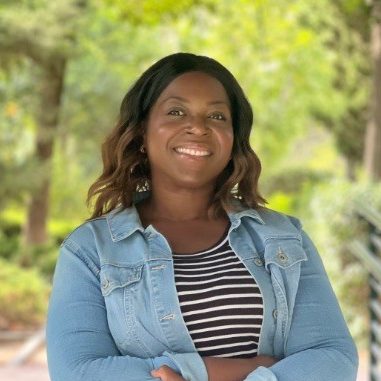
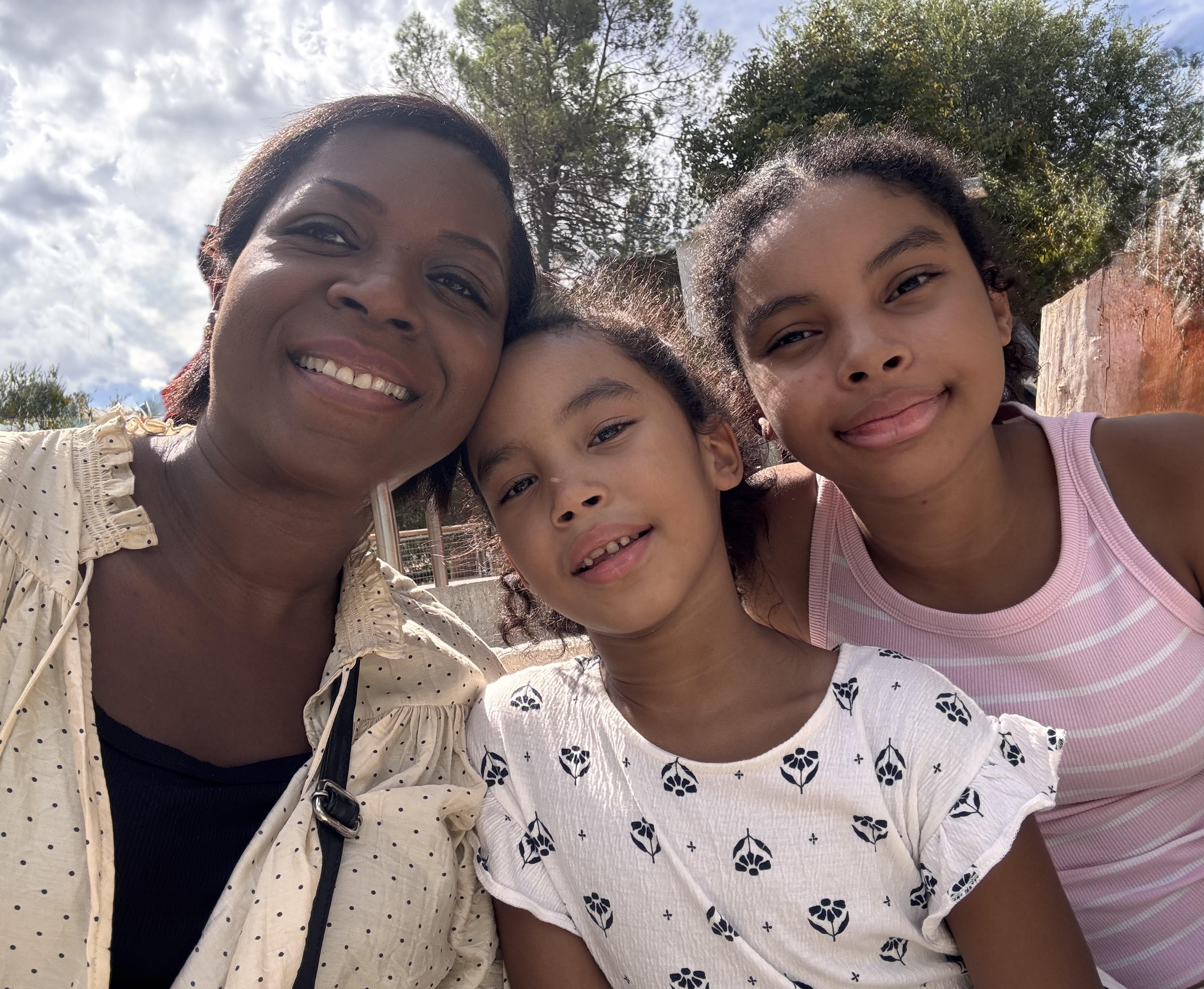
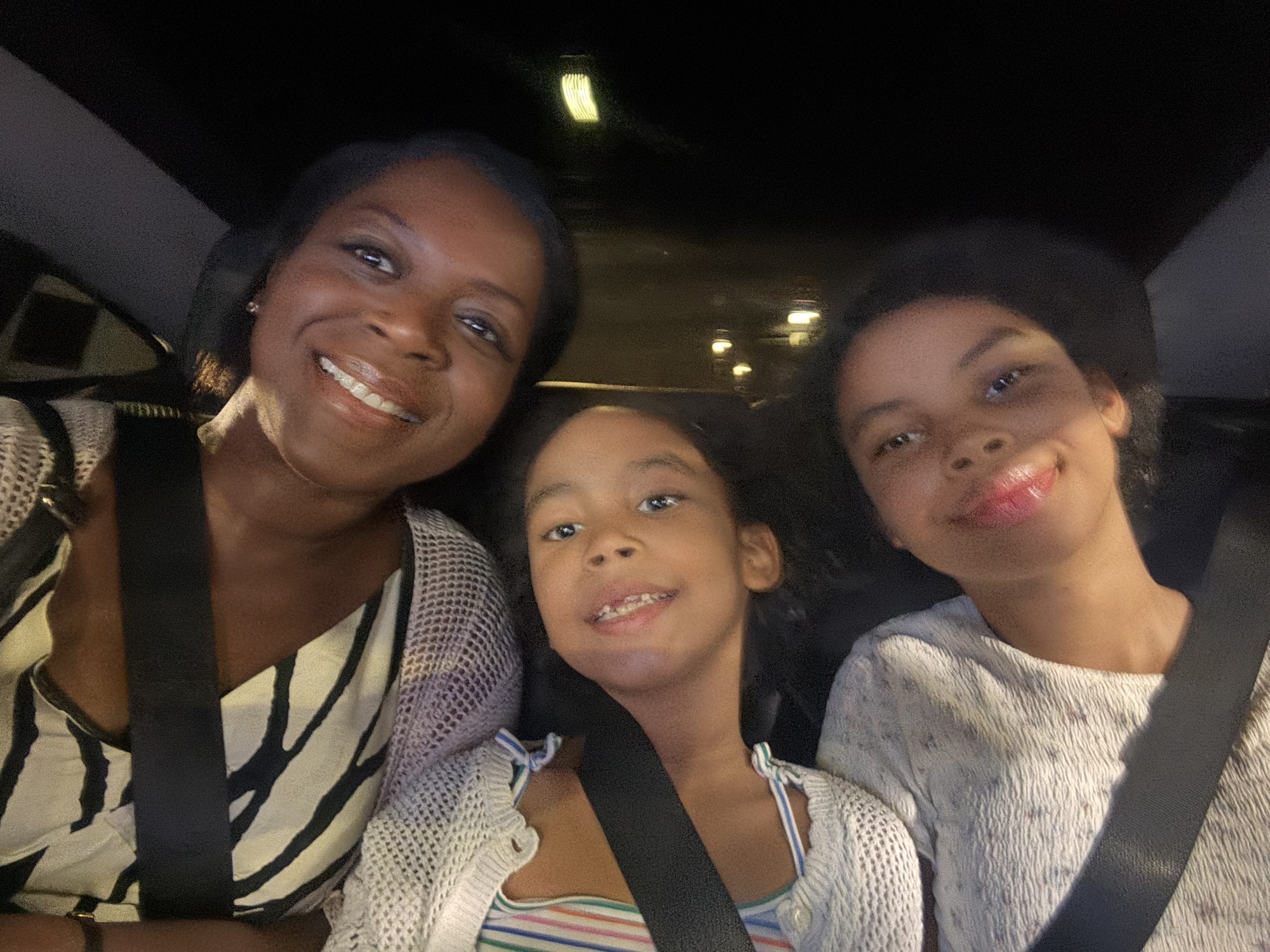
Before I moved to Spain with my two daughters, I genuinely thought constantly being stressed came with the role of being a mom.
Rationing my PTO because I knew my kids would eventually get sick.
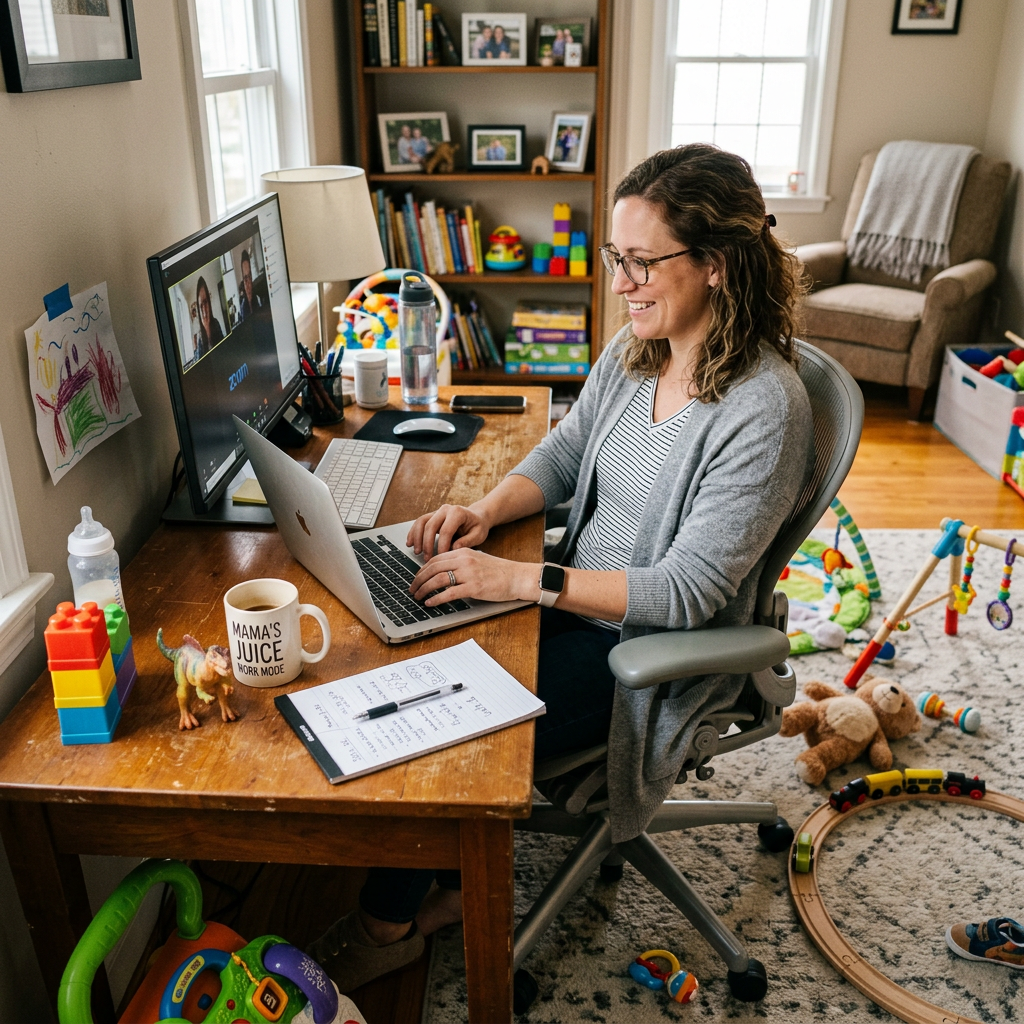
Trying to balance work, home, school, childcare, and everything else.
Feeling guilty when my career needed more of me than my children did, and guilty when my children needed more of me than my career did.
Paying ridiculous amounts for childcare.
Worrying about money.
Feeling like one unexpected expense or unplanned schedule change could completely throw everything off.
I thought that was just life.
Then I moved to Spain.
And I started realizing something that honestly shocked me:
American mothers aren’t necessarily failing. We’re operating in a system that doesn’t support us.
The uncomfortable truth about American motherhood
Let’s start with something that should make every American mother stop scrolling.
The United States is the only OECD country without a national paid maternity leave program. Yes! Read that again. The United States of America is the only OECD country without a national paid maternity leave program.
Meanwhile, across the OECD, paid maternity leave averages roughly 18.5 weeks.
Spain’s system goes even further.
As of 2026, Spain provides 19 weeks of paid birth and childcare leave per parent, with additional provisions for single-parent families.
That isn’t a luxury benefit.
That is a societal decision.
Spain showed me that motherhood doesn’t have to mean survival mode
Spain isn’t perfect. Let’s be very clear about that.
But there are protections for working parents here that made me look at motherhood in the U.S. very differently.
Spain now provides 19 weeks of paid birth and childcare leave per parent, with additional provisions for single-parent families. Workers are also entitled to at least 30 calendar days of paid annual leave.
There are also legal protections around breastfeeding and infant care, reduced working hours for family responsibilities, and unpaid parental leave.
Meanwhile, the United States still has no national requirement for paid maternity leave, and federal law doesn’t require employers to provide paid vacation.
We’re talking about one of the wealthiest countries in the world.
And mothers are still expected to figure out how to recover from childbirth, care for a newborn, and keep their careers moving forward largely through employer policies, personal savings, and whatever support they can find. Basically, we are on our own when raising American children.
Then we wonder why women are exhausted. And why couples are choosing not to have kids.
Being a Black mother adds another layer
I can’t talk about my experience in corporate America without talking about race.
I worked in sales and marketing for some of the largest companies in the United States.
I was consistently one of the strongest performers in my office, yet I watched opportunities go to white men while I remained overlooked.
I was also consistently the only Black woman with an executive position on my teams.
That was always a harsh reality: that I had somehow survived the Hunger Games and had been chosen. One of hundreds of qualified Black women who had applied for my position, and only I was selected. It felt great, and kind of sad at the same time. Amazing because my work ethic and reputation spoke for themselves, and sad because I had somehow made it through, and so many other talented and just as qualified women of color hadn’t.
You see, something I realized early in my corporate career as a Black woman in America is that the higher up the ladder, the less people you see that look like you.
Was every decision because of racism or sexism? I can’t honestly say that.
But when you’re repeatedly the person who has to prove yourself, outperform expectations, and still wonder whether you’re being seen the same way as everyone else, it takes a toll.
And then you add motherhood.
Now you’re trying to be a great employee, a great mother, make enough money, afford childcare, keep your kids healthy, and somehow maintain your sanity.
Eventually, something had to give.
For me, it was my career.
I became a stay-at-home mom, even though that was NEVER my plan.
Expensive childcare and an unfair work environment pushed me away from a career I had worked hard to build.
And honestly?
I wasn’t the only woman making those kinds of sacrifices. A lot of women around me fell off the corporate ladder after motherhood. It is very hard to juggle EVERYTHING.
The Jason Arday situation hit me differently
The recent death of Professor Jason Arday has also been sitting heavily with me.
It took me back to my corporate career, and how you really have to work twice as hard to get the same recognition as everyone else. You have to code-switch, do your hair differently, be cautious of what you say and how you say it to not be labeled “angry” or “aggressive” by just existing and expressing your discomfort or concerns in the workplace.
As a Black woman, I know what it feels like to understand that you can be scrutinized differently.
To feel like your mistakes can become bigger than someone else’s.
To feel like you have to constantly prove that you belong.
What happened surrounding Professor Arday’s academic allegations and the level of public and media scrutiny he experienced was heartbreaking to watch.
I don’t want to speculate about the cause of his death.
But I do think we need to talk about what relentless scrutiny can do to a person.
Every Black person knows some version of that feeling.
What he experienced was on another level, and I can’t imagine how heavy that must have been.
May he rest in peace.
Maybe we’re asking American mothers the wrong question
We’re constantly telling women to manage their stress better.
Stop being so emotional.
Plan your day better.
Meal prep.
Wake up earlier.
Create a better routine.
Practice self-care.
Ask for help.
But maybe we should also be asking:
Why does motherhood require so much survival in the first place?
Why does taking time off with your sick child feel like you’re doing something wrong?
Why does childcare cost so much that women sometimes can’t justify continuing to work?
Why does taking care of yourself after having a baby depend so heavily on your employer?
Why are Black mothers still experiencing worse maternal health outcomes dramatically?
And why have we normalized all of this?
Moving abroad changed the way I see success
I didn’t move to Spain because I thought America was horrible. Though I sincerely do not recognize the country we call the United States of America today as the country I grew up in. I moved because I wanted something different for myself and my daughters.
I wanted safety.
A slower pace.
Better quality of life.
More time together.
And honestly, I was tired. Exhausted!
What I didn’t realize when I left was that I was also leaving behind a system that had convinced me that being constantly overwhelmed was normal. It isn’t.
Spain didn’t magically make life perfect.
But it gave me perspective.
I realized there are different ways to structure a society, different ways to raise children, and different definitions of success.
And that made me wonder:
Could moving abroad actually be possible for other American moms too?
Could moving abroad actually work for your family?
Here’s what I wish more moms understood:
Moving abroad IS possible. But it isn’t something you should do based on a TikTok video and a pretty beach.
Before you decide to take the leap, look at five things:
Your money: What does your family actually spend each month, and would your income support your new life abroad?
Your visa: What legal pathway would allow you to live and work there? Don’t build a plan around a visa you haven’t researched cause you hear so much about it online.
I myself thought I qualified for the digital nomad visa in Spain, Greece, and Portugal because I was making the monthly required income, but once I went to submit my Spain visa application, I found out my company had to be active for 12 months, and I think it was for 5 or 6 six at the time I went to apply. I pivoted and went on with the Student Visa.
Your children: What schools are available? What language will they learn? What documents will you need? If you’re divorced or co-parenting, have you addressed the legal requirements for taking your children abroad?
Your income: Can you work remotely, build an online business, transfer your career, or qualify through another income-based pathway?
Your reality: Are you moving toward a better life, or simply running away from a bad one? Moving abroad won’t eliminate every problem. It should solve the problems you can realistically solve by changing your environment.
You don’t need to quit your job tomorrow.
Start with research.
Compare three or four countries.
Research visas, schools, healthcare, taxes, housing, and your actual monthly budget.
You need the spreadsheet, not just the dream.
That’s what turned moving abroad from a fantasy into a plan for me.
If you’ve been quietly thinking about leaving…
Maybe you don’t actually want to leave America.
Maybe you just want a different life.
More time with your kids.
More support.
More safety.
More breathing room.
More experiences for your children.
More life.
I moved to Spain thinking I was just getting a fresh start.
I didn’t realize how much I would learn about what motherhood could look like once I stepped outside the only system I had always known.
And if you’ve been wondering whether your family could do the same, start there.
You don’t have to book a flight.
Start researching your options.
You may discover that moving abroad isn’t nearly as impossible as you thought.
And you may discover that your first-choice country isn’t actually the right fit.
Both are valuable discoveries.
Because the goal isn’t simply to leave the United States.
The goal is to build a life you don’t constantly need a vacation from.
Somewhere you can live long-term and thrive.
Want to see if moving abroad could actually work for your family?
I’ve created a free Moving Abroad Checklist to help you start thinking through the practical side: from choosing a country and researching visas to finances, documents, housing, schools, and your first 90 days.
Don’t just dream about leaving. Start building a plan.
Book a 1:1 Move Abroad Strategy Call with me today, or ask me a question via Instagram or TikTok; I can turn your comment into an answer video. 🙂
Already picked Spain as your destination? Check out The Moving Abroad with Kids BLUEPRINT; I created the complete step-by-step guide I wish I had to relocate your family to Spain prepared & confident.
I hope this post helps you understand my journey a bit more. Everyone’s is different. One day, I hope that, like me, you realize your WHY was achieved by your move abroad, and you created the life you wanted.
Cheers to new beginnings!
xoxo,
V

Leave a Reply