If you’re an American parent with a chronically ill child like me, considering moving abroad with your kids, there’s probably one question you want answered before you do anything else: What happens if my child gets seriously sick in our new country?
It’s a question I understand personally.
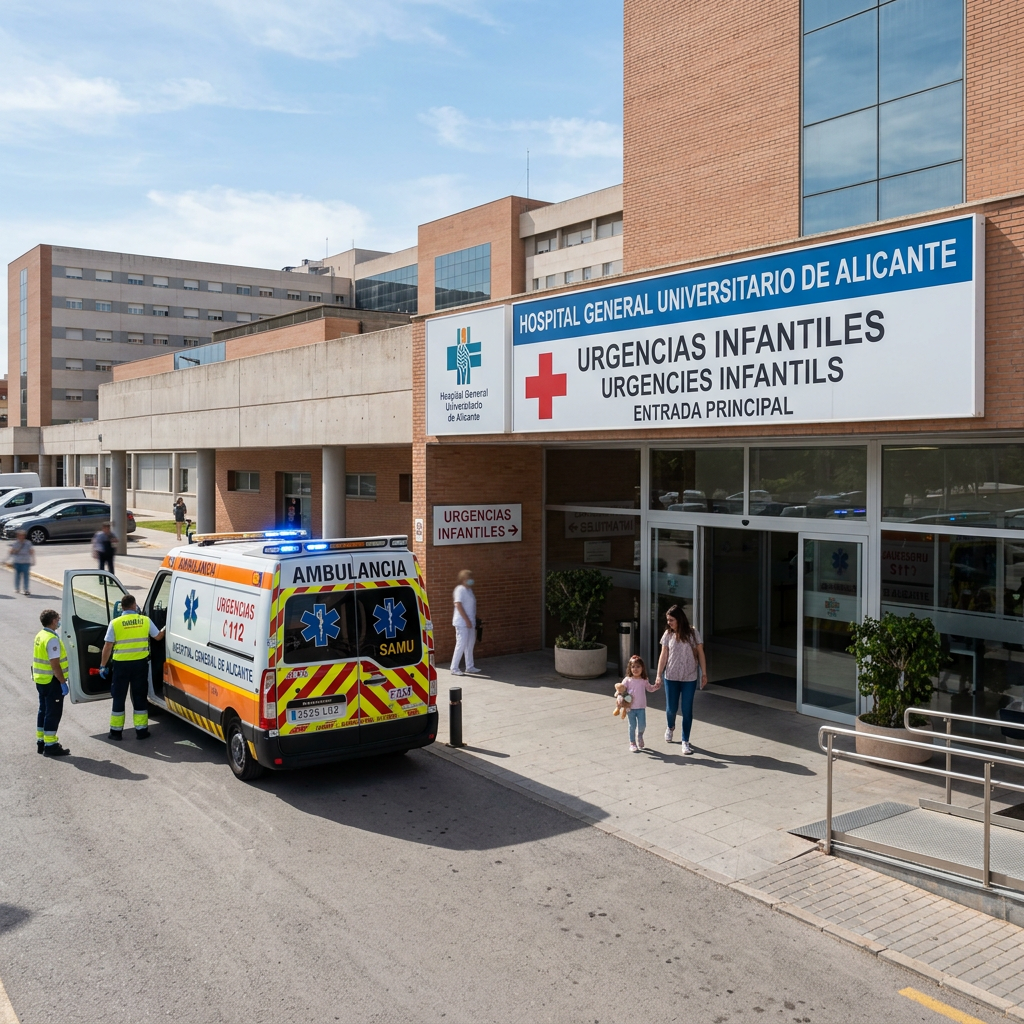
My six-year-old daughter recently spent four days in a public hospital ICU in Spain because of her asthma. As a solo mom raising my children abroad, I experienced the fear every parent dreads: watching your child struggle medically and trusting other people to help them get better in another country and another language.
But this wasn’t my first time navigating a hospitalization for the same reason.
When we lived in New Jersey, my daughter was also hospitalized for asthma. We initially went to Jersey City Medical Center, but she needed to be transferred to Newark’s children’s hospital because the first facility couldn’t accommodate her medical needs. That experience was covered through my private, employer-provided American health insurance. I then received a bill months later for an unpaid co-insurance fee I was unaware of at the time of the emergency.
In Spain, she received exceptional care in a public hospital. Our family had access to the Spanish public healthcare system, funded primarily through taxation, and we also had private health insurance available, which I highly recommend if you can afford it, for quick appointments and checkups.
But thankfully, we didn’t need to use the private insurance for this admission.
The experience challenged some of my assumptions about public healthcare and what it means to raise children safely outside the United States.
I’m not going to tell you that Spain’s healthcare system is perfect, that every hospital provides the same level of care, or that American healthcare is universally worse. One family’s experience cannot establish that.
But I can tell you this: don’t assume that moving abroad means sacrificing your children’s access to quality medical care. Learn how the system actually works, understand your eligibility, and research the facilities available where you plan to live.
I personally was aware of the reputation of Spain’s phenomenal level of care in the public healthcare system. If you’re researching healthcare in Spain for expats, especially American families moving to Spain with kids, this guide will help you understand the public healthcare system, private insurance, visa requirements, pediatric services, emergency care, and what to investigate before making your move, so like me, you know what to expect and immediately advocate for your health when things aren’t going as expected.
Healthcare eligibility, immigration rules, and insurance requirements can change. This guide reflects information available in October 2026. Always verify the rules that apply to your specific visa, region, and family situation with a professional.
Table of Contents
- How does healthcare work in Spain?
- Is healthcare in Spain free?
- Spanish public vs. private healthcare: What’s the difference?
- Who qualifies for public healthcare in Spain?
- Healthcare requirements for Spain’s major visa pathways
- What healthcare is available for children?
- What happens during a medical emergency in Spain?
- How does Spanish healthcare compare with American healthcare?
- What to research before moving to Spain with kids
- Frequently asked questions about healthcare in Spain
1. How Does Healthcare Work in Spain?
Spain has a public healthcare system known as the Sistema Nacional de Salud (SNS), or National Health System. It is primarily funded through taxation and administered through the country’s autonomous communities, which are responsible for organizing much of the healthcare delivered in their territories. This means that access procedures, service organization, and certain aspects of care can vary by region. I did my own extensive research and always tried my best to get the necessary information from official sources.
The Spanish healthcare system generally operates through two main levels of care.
Primary care: Your family’s first point of contact
Primary care is commonly delivered through a local centro de salud, or health center.
Depending on your region, eligibility, and assigned health center, services may include:
- General practitioner appointments.
- Pediatric consultations and routine child health monitoring.
- Vaccinations and preventive care.
- Nursing services.
- Referrals to specialists.
- Management of chronic conditions, such as asthma.
- Follow-up care and prescriptions.
For families with young children, establishing a relationship with a local pediatrician and understanding how appointments work should be part of your relocation plan.
Ask whether your local health center has dedicated pediatric services, how to register your children, how appointments are booked, and what to do outside normal appointment hours.
Specialist care and hospitals
Specialist consultations and hospital care are generally accessed through the public healthcare system, often following a referral from primary care. Emergency situations may follow a different pathway.
Public hospitals can provide inpatient treatment, diagnostic testing, surgery, specialist services, and intensive care, depending on the hospital’s capabilities.
However, not every hospital has every specialty or the same level of pediatric intensive care capability.
My daughter’s hospitalization reinforced why this matters. In New Jersey, she needed a transfer because the first hospital couldn’t accommodate her medical needs. That experience is a reminder that the right question isn’t simply whether a country has good hospitals. It’s whether the right services are accessible to your family in the place you intend to live.
Spain also has private hospitals and clinics operating alongside the public system.
Official resource: Spain’s Ministry of Health — National Health System
2. Is Healthcare in Spain Free?
The answer is more nuanced than a simple yes or no.
For people who qualify for Spain’s public healthcare system, many core services, including public primary care, specialist care, hospital treatment, and emergency services, are generally provided without direct charges at the point of use. The national benefits framework also includes supplementary services, such as prescription medicines, for which patient contributions may apply.
That does not mean every healthcare expense is free.
| Service or expense | What families should know |
|---|---|
| Public primary care | Generally covered for eligible patients. |
| Public specialist care | Generally covered when accessed under the applicable public pathway. |
| Public hospital admission | Core inpatient treatment is generally covered for eligible patients. |
| Emergency treatment | Public emergency services are part of the core benefits package, subject to eligibility and applicable rules. |
| Prescription medication | Patient contributions may apply; the amount depends on the applicable rules and circumstances. |
| Dental care | Public coverage is more limited than many families may expect; private expenses may be necessary. |
| Glasses and contact lenses | Often require out-of-pocket payment or separate coverage. |
| Private doctors and hospitals | Costs depend on your insurance policy, provider, and whether the service is covered. |
| Certain therapies, devices, and elective services | Coverage varies by service and the applicable rules. |
The national framework establishes core benefits, but the details of eligibility, supplementary benefits, and how services are delivered matter. [1]
What does that mean for an American family?
In the United States, many families depend on employer-sponsored insurance, individual policies, or public programs with their own eligibility rules and cost-sharing arrangements.
In Spain, qualifying for the public system can significantly change how your family pays for covered care.
You may no longer be paying a separate private insurance premium to access every core public service, but you still need to budget for things such as uncovered dental treatment, prescriptions, private appointments, and other out-of-pocket expenses.
And don’t forget the costs of maintaining private insurance if your residency pathway requires it.
The important distinction is between a healthcare service being available, your family being eligible to receive it through the public system, and that particular service being covered. Those are three different questions.
3. Spanish Public vs. Private Healthcare: What’s the Difference?
One of the biggest mistakes I see people make when researching healthcare abroad is treating public and private healthcare as if one must automatically be better than the other.
The reality is that they serve different purposes, and the right arrangement depends on your eligibility, health needs, budget, location, and preferences.
Public healthcare in Spain
Spain’s public system provides the core healthcare benefits to eligible people. It is funded primarily through taxation, and core services are generally available without direct charges at the point of use.
Potential advantages include:
- Access to covered primary care and hospital services.
- Public specialist and inpatient treatment.
- A system designed to provide broad population coverage.
- Access to emergency and intensive care services at appropriately equipped facilities.
- Reduced dependence on a private insurance policy for covered public services once eligibility is established.
Things to investigate include:
- Waiting times for non-emergency specialist appointments and procedures.
- The availability of particular pediatric specialists.
- How referrals work in your autonomous community.
- Whether your preferred hospital provides the services your family needs.
- Language support and communication with medical staff.
- Access to services that are not included in the public benefits package.
Public healthcare is not immune to staffing pressures, waiting lists, or regional differences. Research the specific services available in the area where you plan to live.
Private healthcare in Spain
Private healthcare can provide another route to medical appointments and treatment.
Depending on the insurer and policy, potential benefits may include:
- Access to a private network of doctors and specialists.
- Additional appointment options.
- Access to private hospitals and diagnostic facilities.
- Greater choice over certain providers.
- A useful alternative when a family prefers private consultations.
But private insurance is not automatically a substitute for every service offered by the public system.
Policies differ. Some have exclusions, waiting periods, co-payments, provider restrictions, and limits on particular treatments. Pre-existing conditions and chronic illnesses require especially careful review.
A private insurance policy also does not guarantee that every hospital has the specialist, pediatric ICU, or equipment required in a particular emergency.
Public vs. private healthcare in Spain: Comparison table
| Factor | Public healthcare | Private healthcare |
|---|---|---|
| Eligibility | Depends on your legal and healthcare circumstances | Depends on the insurer’s acceptance criteria and policy |
| Funding | Primarily taxation | Premiums and any applicable out-of-pocket charges |
| Core hospital treatment | Generally covered for eligible patients | Depends on the policy and network |
| Pediatric care | Available through public services; capabilities vary by facility | Available through participating providers; capabilities vary |
| Specialist access | Often follows referral pathways | May offer direct access to certain specialists, depending on the policy |
| Waiting times | Can be longer for some non-urgent services | May offer faster appointments for some services |
| Provider choice | Depends on regional arrangements and referral rules | Depends on the insurer’s network and policy |
| Prescription costs | Patient contributions may apply | Depends on the policy and medication |
| Emergency care | Public emergency services are part of the core benefits package | Coverage and billing depend on the policy and circumstances |
| Costs | Core covered services generally have no direct point-of-use charge for eligible patients | Premiums, exclusions, co-payments, deductibles, or other charges may apply |
These are general comparisons, not guarantees for every person or policy.
Can you have both public and private healthcare in Spain?
Yes. Many people have access to public healthcare while also holding private insurance.
That’s the arrangement my family has.
During my daughter’s four-day ICU admission, we used the public hospital. We had private insurance available, but we didn’t need it for that stay.
For me, that was an important lesson: private insurance can be a useful additional option without being the only route to medical care.
However, whether you can access the public system depends on your own circumstances. Holding a private policy does not, by itself, automatically establish public healthcare eligibility.
4. Who Qualifies for Public Healthcare in Spain?
This is one of the most important sections for American families planning a move.
Do not assume that getting a Spanish visa automatically gives you immediate access to public healthcare.
Your eligibility can depend on your residence status, employment or self-employment arrangements, Social Security registration, family circumstances, and the specific rules applicable to you.
The Ministry of Health sets the national framework, while regional authorities manage many practical access procedures. Spain also introduced a new regulatory framework in March 2026 concerning recognition of publicly funded healthcare rights for certain foreign nationals without legal residence, subject to specified conditions and procedures. That is not a reason to assume every newcomer has automatic coverage.
Employment in Spain
If you work for a Spanish employer and are registered with the relevant Spanish Social Security system, you may qualify for public healthcare through that arrangement.
Your family members’ eligibility and the steps required to register them should be confirmed with the appropriate authorities.
If your employer is arranging your move, ask for a clear explanation of when your healthcare registration becomes effective and what documents you need.
Self-employment in Spain
Self-employed people may access public healthcare through the applicable Spanish Social Security arrangements.
If you’re relocating with a remote business, consulting practice, or freelance income, do not assume that working online for American clients automatically makes you eligible.
Your immigration authorization, the legal structure of your work, your registration status, and the applicable rules all matter. Consult an attorney!
Digital nomad visa holders
Spain’s international telework authorization has specific provisions concerning health insurance.
Official guidance states that proof of private insurance may not be necessary when the applicant and accompanying family members are expected to be covered by the National Health System through Social Security registration resulting from an employment or professional relationship. In other cases, qualifying public or private coverage is required under the applicable rules. [3]
Before applying, establish whether your particular work arrangement results in the relevant Spanish Social Security registration or whether you must provide qualifying private insurance.
Do not rely on a generic digital nomad insurance article written for a different employment arrangement.
Non-lucrative visa holders
The non-lucrative residence visa is intended for people who will reside in Spain without carrying out gainful employment or professional activity, including remote work.
Official Spanish consular guidance requires applicants to demonstrate sufficient financial means and qualifying health insurance. The exact documentation must be checked against the consulate responsible for your application. [4]
A non-lucrative visa does not automatically make you eligible for the public system simply because you live in Spain.
Student visa holders
Students applying for qualifying long-term study authorization generally need to provide evidence of health insurance that meets the applicable requirements.
For example, the Spanish Consulate General in Washington’s published guidance requires qualifying insurance from an insurer authorized to operate in Spain, covering the relevant stay and risks covered by the Spanish public system. Its guidance specifies requirements concerning co-payments, deductibles, waiting periods, and coverage limits.
Requirements can differ according to the visa category, consulate, and circumstances. Read the current instructions for the office handling your application.
If you’re considering studying in Spain as a way to establish residence while working toward longer-term goals, calculate the full cost of tuition, living expenses, insurance, and your children’s needs before choosing this pathway.
What about children?
Do not assume that your children automatically have public healthcare coverage simply because you have moved to Spain.
Confirm how each child will be registered, what documents are required, when coverage begins, and how to obtain a health card or other proof of entitlement.
Ask the relevant health authority or Social Security office to confirm your family’s position in writing whenever possible.
Documents to prepare before moving
Depending on your pathway, you may need some or all of the following:
- Passports and residence documentation.
- Proof of Spanish address or municipal registration where applicable.
- Employment or self-employment registration documentation.
- Social Security registration details, if applicable.
- Birth certificates and documents establishing parental responsibility.
- Documents needed to register children as beneficiaries, where applicable.
- Health insurance certificates and policy documents.
- Medical records, prescription information, and vaccination records.
- Documentation supporting ongoing treatment or specialist care.
This is a planning checklist, not a universal list of legal requirements. Confirm the exact documents for your situation.
5. Healthcare Requirements for Spain’s Major Visa Pathways
For American families moving to Spain, insurance requirements should be considered alongside financial requirements, employment arrangements, and the length of the intended stay.
| Visa or pathway | What to investigate |
|---|---|
| Digital nomad / international telework | Whether your work arrangement results in Spanish Social Security coverage or whether qualifying private insurance is required. |
| Non-lucrative residence | The consulate’s current private insurance requirements, permitted activities, and financial documentation. |
| Student residence | Whether your program qualifies, the required insurance standard, and coverage dates for the full authorized stay. |
| Spanish employment | Social Security registration, start date of coverage, and how accompanying children are registered. |
| Self-employment | The applicable registration requirements and how public healthcare eligibility is established. |
The rules can be technical, and a mistake can cost time and money.
Before buying a health insurance policy
Ask the insurer to confirm, in writing:
- Does this policy satisfy the health insurance requirements for my exact visa or residence authorization?
- Is the insurer authorized to provide the required coverage in Spain?
- Does the policy cover the full period required by the consulate?
- Are there waiting periods, co-payments, deductibles, or coverage limits?
- Are pre-existing conditions and chronic illnesses covered?
- Are pediatric consultations, hospital admissions, emergency care, and specialist treatment included?
- What exclusions apply to asthma, respiratory conditions, or other existing diagnoses?
- Are my children covered under the same policy, and are their terms identical to mine?
- What happens if a condition requires a hospital or specialist outside the insurer’s network?
- What documentation will the insurer provide for the visa application?
Important: A policy that is adequate for ordinary travel may not meet the requirements for a long-term Spanish residence or study authorization.
For current requirements, consult the Spanish Ministry of Foreign Affairs and the Spanish consulate responsible for your application.
And if you need a quote from an English-speaking agent representing one of the best insurance carriers in Spain with many different policies to meet your specific visa needs, reach out to
6. Healthcare for Children in Spain: What Parents Should Know
Moving abroad with kids means thinking beyond routine checkups.
You need to understand how the healthcare system will support your children when they are healthy, when they need ongoing care, and when something unexpected happens.
Pediatricians and routine care
Ask your local health center how pediatric services work in your region.
Questions worth answering include:
- Will my child have an assigned public pediatrician?
- How do I book routine appointments?
- Where can I get childhood vaccinations?
- How do I obtain school health documentation?
- How are referrals to pediatric specialists arranged?
- What is the process for obtaining prescriptions?
- Where do we go when the health center is closed?
Do this early rather than waiting until your child is sick.
Asthma and other chronic conditions
My daughter’s experience is particularly relevant to families whose children have asthma or other ongoing medical needs.
Before moving, find out:
- Whether the medications your child uses are available in Spain.
- Whether the active ingredients and formulations differ from those used in the United States.
- How to transfer medical records.
- Whether you need a pediatric pulmonologist or another specialist.
- How prescriptions are issued and renewed.
- How emergency services handle severe asthma attacks.
- Whether your chosen hospital has pediatric intensive care capabilities.
Do not assume that a medication brand sold in the United States will be sold under the same name in Spain.
Ask your child’s clinician to prepare a current medical summary, including diagnoses, medications, allergies, previous hospitalizations, and any emergency action plan.
For a child with a history of serious asthma exacerbations, ask the treating clinician to help you identify the level of emergency and specialist care you should have available in your destination area.
Language and medical communication
Even if you speak Spanish comfortably, medical terminology can be difficult under pressure.
Prepare a concise translated medical summary and a list of current medications. Keep copies on your phone and in an accessible paper folder.
Learn the Spanish terms for your child’s condition, common symptoms, medication names, allergies, and emergency instructions.
If you are not fluent, ask the hospital or health provider whether interpretation assistance is available.
Being prepared helps you advocate for your child when you are tired, frightened, or trying to process unfamiliar information.
7. What Happens During a Medical Emergency in Spain?
One of the most useful things you can do before moving is learn where to seek help in different situations.
In Spain, 112 is the general emergency number. Save it in your phone and teach older children how to use it appropriately.
For urgent or life-threatening symptoms, use emergency services rather than waiting for a routine appointment.
For less urgent concerns, your regional health service may provide out-of-hours medical services, urgent-care centers, or other local arrangements.
Learn which options are available near your home.
Know your nearest hospital
Don’t simply search for the closest hospital on a map and assume it is equipped to treat every pediatric emergency.
Identify:
- The nearest hospital with an emergency department.
- The nearest facility with pediatric emergency services.
- The nearest hospital with pediatric intensive care, if your child’s health needs make that relevant.
- The appropriate route for after-hours care.
- How emergency ambulance transport works in your area.
- Whether your private insurance has a separate emergency network or authorization process.
If your child has a chronic condition, ask their treating clinician which facilities are most appropriate.
Hospital transfers are not unique to one country
My daughter’s transfer in New Jersey was a reminder that hospitals have different capabilities.
A transfer does not automatically mean that the original hospital provided poor care. Sometimes the safest course is to move a patient to a facility with the specialist staff or equipment needed.
The practical lesson for families moving abroad is to understand how referrals and transfers work, rather than assuming the nearest hospital will always provide every level of treatment.
Will you have to pay for emergency care?
Your costs depend on your eligibility, the service used, and the circumstances.
For eligible patients receiving covered services through the Spanish public system, core emergency and hospital services are generally covered. Private facilities, uninsured care, non-covered services, and certain other circumstances can result in charges.
If you are still in the process of establishing coverage, do not assume that every emergency will be free or that a visa insurance requirement guarantees access to all public services.
Confirm your coverage before you need it.
8. Spanish Healthcare vs. American Healthcare: What Families Should Understand
Comparing healthcare systems is complicated because people often compare different things without realizing it.
One person may be comparing monthly insurance premiums. Another may be comparing access to specialists. Someone else may be comparing emergency department experiences, wait times, or the cost of medication.
These are all important, but they do not measure the same thing.
The difference between insurance and healthcare delivery
In the United States, many working-age families rely on employer-sponsored insurance or individual coverage. Insurance networks, deductibles, co-payments, provider availability, and out-of-pocket maximums can influence their experience.
Federal law also provides important emergency protections. Under EMTALA, most U.S. hospital emergency departments covered by the law must provide an appropriate medical screening examination and stabilizing treatment for emergency medical conditions, regardless of ability to pay. Appropriate transfers are required in relevant circumstances.
My daughter’s transfer from Jersey City Medical Center to Newark’s children’s hospital was part of my family’s experience navigating the American system. It should not be interpreted as proof that transfers are unique to America or that the first hospital necessarily did something wrong.
Spain’s public system works differently. For eligible patients, covered public healthcare is financed primarily through taxation rather than a separate insurance premium for each covered service.
That distinction can substantially change how a family experiences the financial side of healthcare.
What my experience taught me
My daughter received exceptional care during her Spanish public hospital admission. We had private insurance available, but did not need it for that admission.
The care and the fear of having a seriously ill child were familiar. The financial and administrative structures surrounding our care were different.
That is why I encourage American families to question the assumption that private insurance automatically means better medical care.
Private care can be valuable. Public care can be exceptional. Both systems have strengths, limitations, and differences in how care is accessed and paid for.
A single family’s experience cannot establish which country has the better system overall. It can, however, demonstrate why it is worth investigating the actual services and financial arrangements available to your own family.
The questions I would ask before comparing countries
Rather than asking only, “Is healthcare better in Spain?”, ask:
- How do we qualify for coverage?
- What are our expected monthly insurance costs?
- What services are included?
- What are the out-of-pocket costs?
- How quickly can children access routine care?
- How are specialist referrals handled?
- Are the hospitals near our preferred neighborhood equipped for our family’s needs?
- What happens if our child needs an intensive care unit?
- Can we continue managing chronic conditions without interruptions?
- What happens if we change employment or residence status?
Those answers are much more useful than a general ranking of healthcare systems.
9. How to Research Healthcare Before Moving to Spain With Kids
This is the checklist I would work through before signing a long-term rental contract, committing to a school, or choosing a Spanish city.
Your healthcare relocation checklist
Eligibility and insurance
- Confirm whether each family member qualifies for public healthcare.
- Identify any insurance requirements attached to your visa.
- Verify when coverage starts.
- Confirm whether children need separate registration.
- Review exclusions, waiting periods, co-payments, and deductibles.
- Budget for services not covered by your chosen arrangement.
Hospitals and emergency care
- Identify your nearest emergency department.
- Confirm which hospitals provide pediatric emergency care.
- Identify the nearest appropriate specialist hospital for your children’s needs.
- Learn the local emergency number and after-hours care arrangements.
- Understand how ambulance transfers and hospital referrals work.
Medical history and prescriptions
- Request copies of your children’s medical records.
- Prepare a current medication list.
- Check medication availability and prescription requirements.
- Bring vaccination records.
- Obtain translated medical summaries where helpful.
- Arrange continuity of care for chronic conditions.
Everyday logistics
- Find your local health center.
- Learn how to book appointments.
- Confirm the registration process for your children.
- Research local language support.
- Keep emergency contacts and medical information accessible.
- Recheck coverage if your job, visa, or residence circumstances change.
A note for families considering other countries
Spain is my home and the country where I have direct experience navigating healthcare with my children. But the same planning principles apply if you are considering Portugal, France, Germany, or another destination.
Do not assume that one country’s public healthcare rules apply elsewhere. Investigate each country’s eligibility requirements, insurance obligations, pediatric facilities, prescription rules, and emergency services independently.
The right destination is not simply the country with the lowest healthcare costs. It is the place where your family can build a sustainable life and access the services you need.
10. Frequently Asked Questions About Healthcare in Spain for Expats
Is healthcare free in Spain for American expats?
Some healthcare services are provided without direct charges at the point of use for people eligible for the Spanish public system. However, American nationality or residence alone does not establish eligibility in every situation. Prescription contributions, private services, dental care, and other expenses may still apply.
Can Americans moving to Spain use public hospitals?
Yes, Americans who qualify for Spain’s public healthcare system can generally access covered services through that system, including public hospitals. Your eligibility depends on your circumstances and applicable rules. Others may need to rely on qualifying private insurance or another valid healthcare arrangement.
Do American families need private health insurance to move to Spain?
It depends on the visa or residence pathway. Certain applications, including non-lucrative and student pathways, require qualifying insurance under the applicable rules. Other applicants may be able to establish coverage through Spanish Social Security registration. Check the requirements for your exact situation before applying.
Is private healthcare better than public healthcare in Spain?
Not automatically. Private healthcare may offer additional provider choice or faster appointments for certain services. Public healthcare provides core services to eligible patients, including hospital treatment. Quality, access, waiting times, and specialist availability vary by provider and location.
Can my child see a pediatrician in Spain?
Pediatric services are available within Spain’s healthcare system. How your child accesses care depends on eligibility, regional arrangements, registration, and the services offered by your local health center.
Are children’s hospital stays covered by Spanish public healthcare?
Covered hospital care is generally provided through the public system for eligible patients. The exact circumstances and applicable coverage rules matter, so confirm your family’s eligibility and the hospital’s capabilities.
What if my child has asthma or another chronic condition?
Before moving, research medication availability, specialist access, emergency services, and the capabilities of hospitals near your intended home. Arrange continuity of care and prepare medical records and an emergency plan with your child’s clinician.
What is the emergency number in Spain?
The general emergency number is 112. Save it in your phone and learn the local procedures for urgent medical care.
Does having private insurance mean I can use any private hospital in Spain?
No. Access depends on your policy, provider network, exclusions, authorization requirements, and the services offered by the hospital. Confirm these details with the insurer before relying on a particular facility.
Is healthcare in Spain better than healthcare in the United States?
There is no single answer that applies to every patient or medical need. The systems differ in funding, eligibility, cost-sharing, provider access, and service delivery. My family’s experience showed me that exceptional care is possible in Spain’s public system, but the best comparison for your family depends on the services you need and your access to them.
Final Thoughts: Moving Abroad With Kids Means Preparing for the Scary Stuff, Too
Moving abroad with children is about more than finding an affordable home, choosing a school, or discovering a beautiful new place to live.
It’s also about understanding how you’ll care for your family when something goes wrong.
My daughter’s four-day ICU stay in Spain was frightening. I would never wish that experience on another parent. But it also challenged assumptions I had about public healthcare and reminded me that the systems we grow up with are not the only way to organize medical care.
Our experience is one family’s story, not a guarantee about every hospital or every patient’s outcome.
What I want other American families to take away from it is simple: don’t let assumptions make your relocation decisions for you. Research the real requirements, understand your coverage, investigate the hospitals available to your family, and make decisions based on evidence rather than fear.
You do not need to know everything about another country’s healthcare system before you begin planning a move. But you do need to know which questions to ask and where to find reliable answers.
That’s how you move abroad with your children with more confidence and fewer avoidable surprises.
And that’s what I want to help you do here at Your Mom Friend.
If you’re seriously considering moving abroad with your kids, explore my other relocation resources for practical guidance on visas, housing, schools, finances, and the realities of building a family life outside the United States.
What’s your biggest concern about healthcare when considering a move abroad with your children? Share your question or experience. It may help another family prepare for their own move.
Official resources and further reading
- Spain’s healthcare system: Commonwealth Fund — International Health Care System Profiles: Spain. Overview of public financing, benefits, and coverage.
- Public healthcare access: Spanish Ministry of Health — Access to Public Healthcare. Includes the 2026 framework and eligibility procedures.
- Digital nomad / international telework: Spain’s official Plataforma One — Digital Nomad Application. Explains the public coverage and private insurance provisions.
- Non-lucrative residence visa: Spanish Embassy in Washington — Non-working Residency Visa. Official application guidance.
- Student visa: Spanish Consulate in Washington — Study Visa. Official insurance documentation requirements.
- U.S. emergency care protections: Centers for Medicare & Medicaid Services — EMTALA. Explains emergency screening, stabilization, and transfer requirements.
This article is educational information, not individualized medical, immigration, or legal advice. Confirm current requirements with the relevant Spanish authorities, consulate, insurer, or qualified professional before making decisions.
Thankfully, my daughter has fully recovered. She is off her meds and back to her playful, silly self.
I will be forever grateful to the nurses and doctors who helped her get better with so much compassion, kindness, and professionalism.
I sincerely hope you find this post helpful. I hope you save it and return to it whenever you need.
Cheers to new beginnings!
xoxo,
V





Leave a Reply